Tuesday, January 20, 2015

A Trip to the Theatre

Do you always go to the cinema instead of (en vez de) the theatre? If the answer is yes, you don’t know what you are missing. Theatre gives you the opportunity to see talented actors and actresses live (en directo) Today, we take a special look at theatre in Wales –the world-famous International Festival of Musical Theatre in Cardiff, the world of pantomime, including the Jack and the Beanstalk story, and contemporary Welsh theatre.

Musical Theatre
The most popular form of theatre in Wales is musical theatre. This became fashionable during the 1940s with the playwrights (escritores) Ivor Novello and Harry Davies. The latter (el último) produced Full Swing, and The Lisbon Story, with its songs Red Sails In The Sunset and Pedro The Fisherman, which are still being shown to large audiences. In the sixties Julian More wrote the memorable hits Grab Me A Gondola, Expresso Bongo, and The Golden Touch.

      
The Pantomime 
At Christmas time, theatres in Wales and the rest of Britain perform their annual pantomime. This is family entertainment that is extremely popular with young children. This theatre genre brings a mixture of song, dance, slapstick (bufonada) and satire to storylines (argumentos) loosely (libremente) based on traditional children’s stories. It traditionally has some conventions unique to theatre, where the main male character (personaje malvado masculino) is performed by a young woman, and the part of an older woman is acted by a man in drag.(vestido de mujer) There is also pantomime cow or horse consisting of two actors in a single costume. One is the head and front legs, while the other is the body and hind legs.(patas traseras) The actors on stage encourage audience participation, who often shout “he's behind you!”, "oh yes it is!" or "oh no it isn't!". Below are some popular Pantomime shows that are regularly performed at Christmas time throughout (por todo) Britain.
 
Cinderella 
Sleeping Beauty 
Dick Whittington 
Goldilocks and the Three Bears 
Jack and the Beanstalk 
Snow White 
Mother Goose 
Peter Pan 

Friday, January 16, 2015

Sayings !

A  saying (dicho)  is  a well-known and wise statement, which often has a meaning that is different from the simple meanings of the words it contains. Here are  a few  examples: 


Too many chiefs and not enough Indians

If everybody wants to be the boss and nobody wants to work, then there are too many chiefs and not enough Indians.

When the cat’s away the mice will play.

When the authority figure is away, the subordinates are free to do what they want.

No pain, no gain

If you don’t make an effort and a sacrifice, you won’t achieve anything.

To see red

If you see red, you become angry; lose self-control.

Wednesday, January 14, 2015

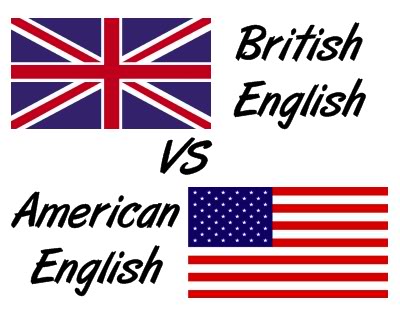
US vs UK

Americans speak English but it’s not quite the same as in England! Some of the words are different, some of the spelling is different and the accent is different too. Let’s have a look at some examples.


Call me a cab!

In America they use the word "cab" instead of "taxi", or the word "check" instead of "bill" when you want to pay in a restaurant. Well, these are just some of the different words they have in America. When they talk about “going up in the elevator”, it’s the same as the lift. Americans put gasoline in their cars, not petrol, and they drive on highways or freeways, not motorways. They stand in line at a drugstore while the British queue (hacen cola) at a chemist’s and they wear pants, not trousers. They use zip codes (códigos postales), not postcodes. How many more differences can you find while you’re in America?


How do you spell it?

In America, they spell harbour without a “u” – harbor. This is very common with words like colour, neighbour and labour –or color, neighbor and labor. Britain has a Ministry of Defence, the Americans a Department of Defense. Something else to notice in America!


Howdy!

Real New Yorkers have a very strong accent. In fact, the voice of the cartoon character Bugs Bunny is based on (basados en) a Brooklyn accent. They speak very quickly and sometimes British people can’t understand them! If you go South, to New Orleans, the accent there is softer (más suave) and more open, and in the west they speak with a John Wayne drawl!(manera de hablar lenta) But don’t worry – Americans are very polite (educado) and will always repeat what they have said. Oh, and if you’re wondering, “Howdy!” is American for “How do you do?”!


Friday, January 9, 2015

My and mine


Possessive adjectives (my, your, etc) are used with a noun:
My name is John. What is your name?
I lost my keys in the bar.
Peter broke his arm when he fell off a tree.
Possessive pronouns (mine, yours, etc) are used when we do not want to repeat the same noun because it is clear what we are talking about. They can always be substituted by a possessive adjective + a noun:
My name is John. What is yours? [=What is your name?]
My father and I both have a Renault, but mine is bigger than his [=my Renault is bigger than his Renault].
Alice’s dog is not as tall as mine [as my dog].


BE CAREFUL: We normally add –s to the possessive adjective to make a possessive pronoun (her → hers; our → ours). This –s does not mean plural.


Study the following table.

Possessive adjectives
Possessive pronouns
my
your
his
her
its
our
your
their
mine
yours
his
hers
-
ours
yours
theirs


Practice 
Complete the sentences with the right possessive. Use mine / my (2) / yours /her.
Mary broke (a) __________ leg last week when she went skiing. I’ve never broken (b) __________, but I broke (c) ___________ arm once when I fell down the stairs.
(d) __________ cat is called “Pussy”. What is (e) __________ called?

Answer key:
Practice : (a) her; (b) mine; (c) my; (d) my; (e) yours