Showing posts with label food. Show all posts

Saturday, November 1, 2014

What's in your Lunchbox ?

En este post ofrecemos algunas ideas a todos aquellos que comemos fuera de casa para que  los contenidos de nuestra fiambrera/tartera sean más apetecibles y saludables.

When you do not have the time to go home for lunch, or the money to go to a restaurant every day, the best solution is to fill (llenar ) your lunchbox ( tartera/fiambrera) with all the sustenance you need for the working day. There are many options for planning your midday meal, and making it more varied and creative. You do not have to take only a cheese sandwich and a piece of fruit. Let's look at ways to make the contents of your lunchboxes more interesting and your diet healthier.


Tips (consejos) for Preparing Lunch

It is difficult to be creative at 7.30 in the morning. It is better to plan what you will eat for the week at the weekend. Prepare different types of food for every day of the week, not only a ham and cheese sandwich from Monday to Friday. If you have access to a microwave, you have many more options. You can reheat (recalentar) dishes like pasta with Bolognese sauce or ratatouille,(pisto) for example. One way to save ( ahorrar ) time is by making extra food for your dinner and having the rest for lunch the next day. Avoid (evita) foods that are too delicate to last (durar) for several hours in your lunchbox, like sliced (en rodajas) avocado or banana.


" Turkey Pesto Sandwich"


Revamp (actualiza ) your Sandwich

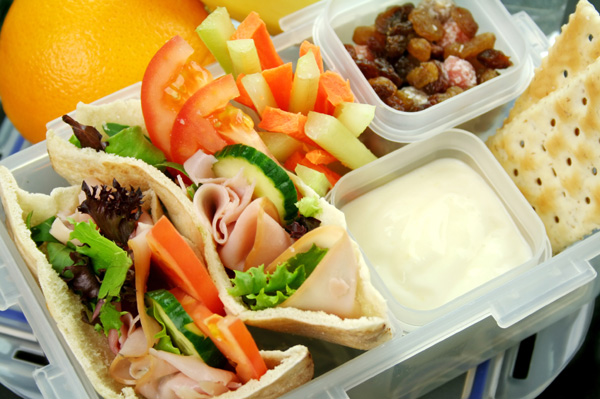
Sandwiches are a quick and simple option, and you are not limited to only cheese or ham baguettes. To make them more interesting, vary the type of bread you use. Try  pitta bread, chapatti or walnut (nuez) bread, for example. Use more than one filling (relleno) in the sandwich, combining various cooked meats, cheeses, tinned fish (pescado en lata) and salad vegetables. Include interesting dips ( salsa para mojar ) like hummus or tzatziki or some fresh herbs .

Interesting Salads

There are endless ( un sinfín de ) ways to make salads and they provide  the essential vitamins we need every day. To make them more consistent, use rice, pasta or couscous. You can make plain salads more interesting by adding  fruit or nuts,(frutos secos ) such as ( tales como ) fresh pineapple,(piña ) cherries (cerezas) or sunflower seeds. (pipas ) Ideally you should dress ( aliñar ) the salad immediately before eating it. It is a good idea to keep  a bottle of olive oil and some salt at work for this.
"An apple  a day...  "
An Apple a Day

 ‘An apple a day keeps the doctor away’(una manzana al dia nos mantiene alejados del médico ) is a common English proverb. Doctors recommend five portions of fruit and vegetable every day to stay healthy. Apples are appropriate to take in your lunchbox because they are more resistant than softer fruit like peaches (melocotones ) or plums.(ciruelas) .

 Something to Drink

 What can you drink with all these assorted lunches? Water is probably the most common option, but it does not have to be plain water. You can find lemon, strawberry or cherry flavoured water. It is also fun to experiment with fruit juices, combining different flavours (sabores)  until you find the combination you like best. You can also try different fruit and herbal teas or apple and banana beers. If you do all the things we recommend, all your colleagues will stop going to restaurants and join (unirse ) you for lunch instead!


Saturday, October 25, 2014

Food from England: fish and chips.

"Fish and  chips wrapped up in a sheet of paper "

In England a typical dish is battered (rebozado * fish and chips. It is traditionally eaten for lunch or dinner and can be bought from the supermarket and made at home.But  the best way is to buy it from a special Fish and Chip shop. This is a shop where the fresh fish is fried in crunchy (crujiente) batter and served with chips and wrapped up in a sheet of newspaper ( página de un periódico **. The Fish and Chip shop will also serve a choice of  peas (guisantes) , curry sauce (salsa de curry)  or baked beans (alubias cocidas en salsa de tomate )  to accompany the fish and chips. The fish is white fish: cod (bacalao)   or haddock ( abadejo . Don’t forget the essential ingredient: tomato sauce ! 

* batter: a mixture of flour, eggs and milk or water used in cooking  (mezcla culinaria a base de harina, huevos y leche o agua ).
** de ahí la frase  "Today's news is tomorrow's fish and chips paper" ( Las noticias de hoy son el papel para envolver fish and chips de mañana ) .

Saturday, September 27, 2014

Useful phrases to use in a restaurant


Waiter ,please! ¡Camarero, por favor !
Do you have a table for two? ¿Tienes una mesa para dos personas?
I have a table reserved for John Tengo una reserva para John
What would you like to eat? ¿Qué quieres comer?
Are you hungry? ¿Tienes hambre?
What would you like to drink? ¿Qué quieres beber?
Would you like something to drink? ¿Quieres tomar algo?
What do you recommend? ¿Qué nos recomienda?
I would like to order dinner now .Quiero pedir  la cena ahora
The menu, please! La carta, por favor / El menú, por favor
Can I have a clean fork please?  ¿Me puedes traer un tenedor limpio,por favor?
Well done  muy hecha
Rare poco hecha
Sweet dulce
Tasteless soso
Fried frito
Savoury salado
This is not what I ordered Esto no es lo que he pedido
The bill please La cuenta, por favor
A beer please/two beers please Una cerveza, por favor/dos cervezas, por favor

Tuesday, August 19, 2014

Zanzibar

The food of Zanzibar is some of the best and most varied in Africa. The people who have come to the island – especially Persians, Arabs, Indians and Black Africans – have brought new ingredients and created a fusion of techniques. The result is a distinctive cuisine, which uses abundant rice, coconut, bananas and spices. It is colourful, fragrant and exciting, and one more excuse for visiting this beautiful destination.


Coconuts and Bananas
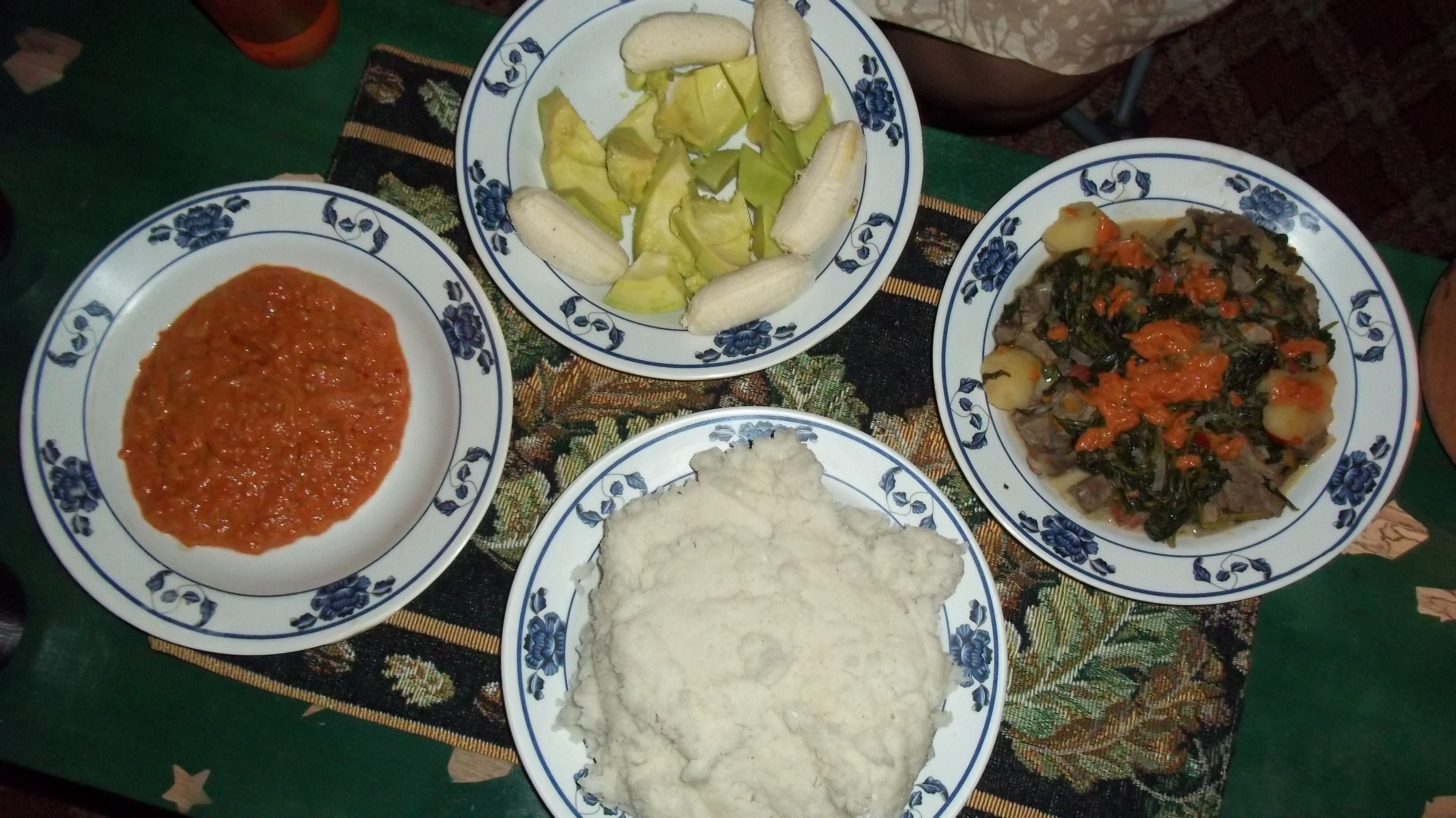
These two ingredients are essential for Zanzibar’s cuisine. In Stone Town Market you can see children carrying fresh coconuts on their heads. They open them with a machete and you drink the delicious juice. The flesh (pulpa) is made into coconut milk. This is added) to fish, meat and vegetable dishes, including soups. You can eat fresh bananas or use them as an accompaniment to savoury (sabrosos) dishes.

Ugali and Pilau Rice
The basis of a typical meal in most of East Africa is Ugali, made from maize (maíz) or cassava (mandioca) flour.(harina) Some visitors will find the texture strange, but it is perfect for absorbing the sauces of meat or vegetable dishes. On special occasions there is magnificent pilau rice. This dish is common to the Middle East and West Asia, and adapted to local cultures and ingredients. It is an elaborate dish made with spices, nuts, (nueces) dried fruit (frutos secos) and meat.


Sugar Cane Juice (zumo de caña de azúcar)
Because the majority of Zanzibarans are Muslim,(musulmanes) alcohol is not served in many places. In hotel bars you will find the Tanzanian national beer, called Safari Lager. The best drinks are delicious fruit juices made with the island’s abundant fruits. A glass of sugar cane juice with lime and ginger (gengibre) will be a memorable experience. Or why not have some spicy ice cream, made with a combination of the island’s spices?


Thursday, June 26, 2014

The food in Ibiza


Sun, sea, sand…and sangria! This is what many visitors associate with Ibiza. But discerning (entendidos) tourists know that the Balearic Islands, and Ibiza in particular, have many gastronomic secrets. There will be ensaimada for breakfast, fresh fish for lunch, then flaó and herb liqueur for dessert, and a large piece of coca in the evening. A few glasses of local red wine, and you have all the ingredients for a perfect holiday.

 
Coca and Ensaimada

For a Balearic breakfast you can have a sweet spiralled pastry roll,(pasta de repostería) called an ensaimada. These are sometimes filled (rellena) with sweet pumpkin paste.(cabello de ángel) They make an excellent present – at the airport you can see tourists carrying large octagonal boxes with enormous ensaimades in them! Coca is flatbread, similar to the pizza, which is baked (horneada) with many different toppings.(coberturas) Some of the popular varieties are coca d'espinacs, made with spinach, coca amb pinxes, made with sardines, and coca amb trempo, made with assorted vegetables. You can buy coca at any bakery and it is delicious at any time of the day (or night).
 
Two Fish Dishes
A perfect way to taste the flavours (sabores) of the sea is trying guixat de peix, a classic dish from Ibiza. This is a fish stew (guiso de pescado) that combines many different types of fish and seafood (marisco) with potatoes. You eat it with alioli, a type of garlic (ajo) mayonnaise. Another dish, called peix sec (dried fish) is one prepared by fishermen, (pescadores) who add spices to the fish and leave them to dry on their boats. You can use it in many dishes. One of these is called Formentera salad, made with dried fish, tomato, potato and onion.

Flaó and Greixonera 
There are several emblematic desserts served on the island. The most important of these are flaó and greixonera. Flaó was originally eaten at Easter, (Semana Santa) and is round cake made with eggs and soft cheese. You eat it with a glass of sweet wine or frígola liqueur . Greixonera is a cinnamon-flavoured (con sabor a canela) pudding. It was traditionally a way to use the dry ensaimades from the day before. The name comes from the dish used for cooking it in, an earthenware (de barro) dish, the greixonera (like the origin of the paella, of course!).

 
Traditional Liqueurs
The perfect way to begin a meal is with an aperitif of palo, a local (de la zona) liqueur made with burnt (quemado) sugar, and soda. After the meal you can have one of the variety of herb liqueurs, called herbes. These are made with herbs like rosemary (romero), fennel (hinojo) and aniseed,(anís) which are macerated for several months. These can be either sweet or dry. (dulce o seco) Finally, there is frígola, a slightly (un poco) dry liqueur made with thyme (tomillo), and ideal to accompany desserts.